
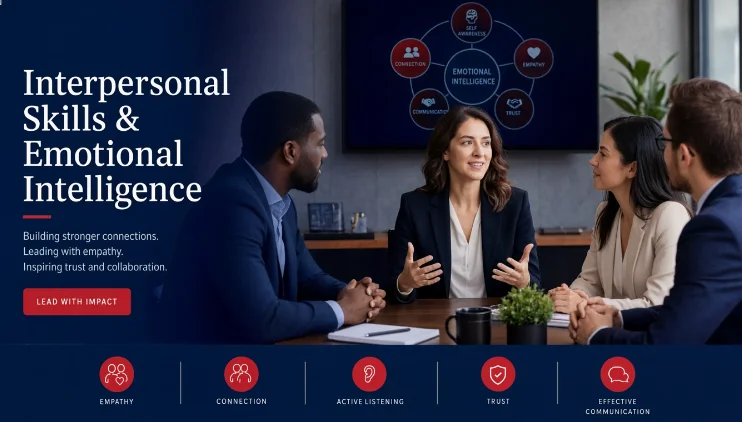
Introduction: Why Interpersonal Skills and Emotional Intelligence Matter
In today’s fast-changing personal and professional world, technical knowledge alone is no longer enough to achieve long-term success. Developing Interpersonal Skills & Emotional Intelligence is essential for anyone who wants to improve communication, build stronger relationships, and achieve professional success. The ability to communicate effectively, understand emotions, build strong relationships, and manage interactions with others has become one of the most valuable skills for individuals and leaders.Developing Interpersonal Skills & Emotional Intelligence is essential for professionals who want to improve communication, strengthen relationships, and achieve long-term success
Interpersonal Skills & Emotional Intelligence play a crucial role in how people connect, collaborate, and succeed. These skills influence everything from workplace relationships and leadership effectiveness to personal growth and decision-making.
Many professionals have strong expertise in their fields but struggle to reach their full potential because of communication challenges, difficulty managing emotions, or ineffective relationships. Developing emotional intelligence and interpersonal communication skills can help individuals create meaningful connections, handle challenges confidently, and become more effective leaders.
What Are Interpersonal Skills?
Interpersonal skills are the abilities that help individuals communicate and interact effectively with other people. They include verbal and non-verbal communication, active listening, empathy, teamwork, conflict resolution, negotiation, and relationship-building.
Strong interpersonal skills allow individuals to:
- Communicate ideas clearly and confidently.
- Build trust with colleagues, clients, and teams.
- Handle disagreements professionally.
- Work effectively in collaborative environments.
- Create positive and productive relationships.
In the workplace, interpersonal skills are essential because success often depends on the ability to work with others, influence people positively, and create an environment based on respect and cooperation.
What Is Emotional Intelligence?
Emotional Intelligence (EQ) refers to the ability to recognize, understand, manage, and use emotions effectively in ourselves and others.
Unlike traditional intelligence, which focuses mainly on knowledge and problem-solving abilities, emotional intelligence focuses on emotional awareness, self-control, empathy, and social understanding.
A person with high emotional intelligence can:
- Understand their own emotions.
- Control emotional reactions in difficult situations.
- Recognize the feelings of others.
- Respond instead of reacting impulsively.
- Build stronger relationships.
Emotional intelligence is especially important for leaders because leadership is not only about making decisions; it is also about understanding people and inspiring them toward shared goals.
The Five Key Components of Emotional Intelligence
1. Self-Awareness
Self-awareness is the foundation of emotional intelligence. It means understanding your emotions, behaviors, strengths, weaknesses, and personal triggers.
People with strong self-awareness recognize how their feelings influence their decisions and relationships. This awareness allows them to make better choices and continuously improve themselves.
For example, a leader who understands that stress affects their communication style can take steps to manage pressure before responding to their team.
2. Self-Management
Self-management is the ability to regulate emotions and maintain control during challenging situations.
In professional environments, problems, conflicts, and unexpected changes are unavoidable. Individuals with strong self-management skills remain calm, think clearly, and choose productive responses instead of emotional reactions.
This skill helps professionals become more resilient and adaptable.
3. Empathy
Empathy is the ability to understand and recognize the emotions, perspectives, and experiences of others.
Empathetic individuals create stronger connections because they make others feel heard and valued. In leadership, empathy helps managers support their teams, improve communication, and build trust.
4. Social Skills
Social skills connect emotional intelligence directly with interpersonal communication.
These skills include:
- Building professional relationships.
- Communicating effectively.
- Influencing others positively.
- Managing conversations.
- Resolving conflicts.
Strong social skills help individuals navigate different personalities and create successful interactions.
5. Motivation
Emotionally intelligent individuals usually have strong internal motivation. They are driven by personal growth, meaningful goals, and continuous improvement rather than only external rewards.
This mindset helps them remain focused and persistent during challenges.
The Connection Between Interpersonal Skills & Emotional Intelligence
Although interpersonal skills and emotional intelligence are different concepts, they work together to create effective communication.
Emotional intelligence helps individuals understand emotions, while interpersonal skills help them use that understanding in real-life interactions.
For example:
A manager notices that an employee seems frustrated. Recognizing this emotion requires emotional intelligence. Having a supportive conversation, listening actively, and finding a solution requires interpersonal skills.
Together, these abilities create stronger relationships and healthier communication patterns.
Why Emotional Intelligence Is Important for Leadership
Modern leadership requires more than authority and technical expertise. Successful leaders must understand people, communicate clearly, and create environments where individuals feel motivated and respected.

Leaders with strong emotional intelligence can:
- Build trust within their teams.
- Give constructive feedback.
- Manage workplace conflicts.
- Encourage collaboration.
- Inspire and motivate employees.
Organizations increasingly value emotional intelligence because leaders who understand human behavior can create stronger teams and achieve better results. Organizations and individuals are increasingly investing in Interpersonal Skills & Emotional Intelligence because these abilities directly influence leadership performance, teamwork, and professional growth
How to Improve Interpersonal Skills and Emotional Intelligence
Emotional intelligence and interpersonal skills are not fixed abilities. They can be developed through awareness, practice, and professional guidance.
Discover how Interpersonal Skills & Emotional Intelligence can improve communication, leadership, workplace relationships, and professional success through effective coaching and personal development.
Practice Active Listening
Active listening means giving full attention to the speaker, understanding their message, and responding thoughtfully.
It helps improve relationships because people feel respected and understood.
Develop Self-Awareness
Reflecting on your emotions, behaviors, and communication patterns can help you identify areas for improvement.
Journaling, feedback, and personal reflection are effective ways to increase self-awareness.
Learn Conflict Management
Conflicts are a natural part of human relationships. Learning how to manage disagreements calmly and professionally can improve both personal and workplace relationships.
Work with a Professional Coach
Coaching provides personalized support for developing communication skills, emotional intelligence, and leadership abilities.
A professional coach helps individuals identify limiting patterns, strengthen their strengths, and create practical strategies for personal and professional growth.
Conclusion: The Power of Emotional Intelligence and Interpersonal Skills
In a world where relationships and communication define success, Interpersonal Skills & Emotional Intelligence have become essential skills for personal development, leadership, and professional growth. By improving Interpersonal Skills & Emotional Intelligence, individuals can create stronger connections, communicate more effectively, and become more successful leaders.
By improving emotional awareness, communication abilities, and relationship-building skills, individuals can become more confident, effective, and successful in every area of life. Investing in emotional intelligence is not only an investment in better communication; it is an investment in stronger relationships, better leadership, and long-term success. Through professional coaching, individuals can develop these skills and unlock their full potential. By improving Interpersonal Skills & Emotional Intelligence, individuals can create meaningful relationships, communicate effectively, and become more confident leaders.